

Teaching kids about electrical safety: Part 1
Font Size:
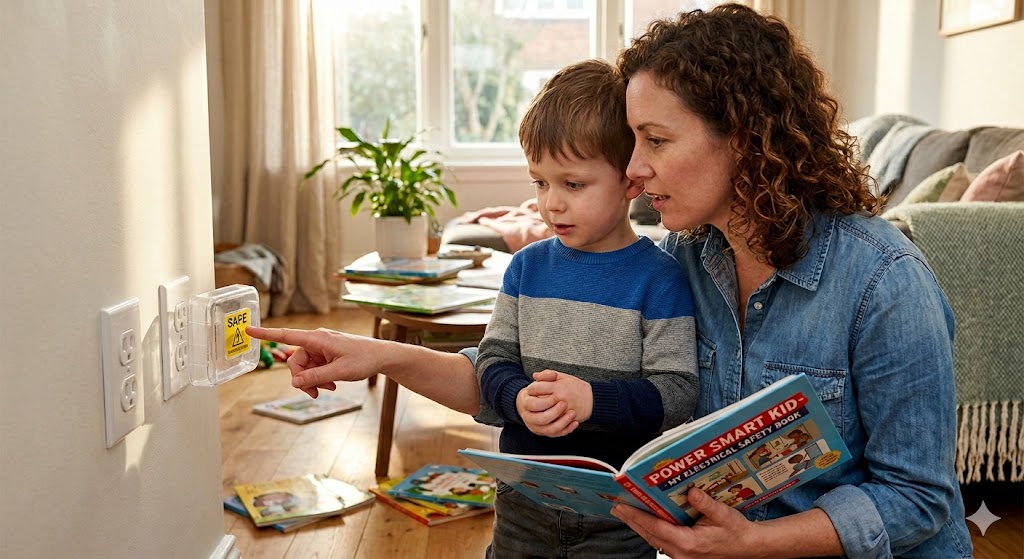
The month of May is recognized nationally as Electrical Safety Month. That designation provides a good opportunity for families to spend a little time together, before the end of the month, reviewing safe practices around electricity at home.
Starting early to teach children about electrical safety is important. Such discussions help youngsters to be aware, and recognize potential hazards before accidents ever happen.
Children are naturally curious, especially about this subject. But simple and straight-forward conversations about electricity – both its great benefits and its real dangers – can help kids develop safe habits that last a lifetime.
One important lesson for young people is a healthy respect for electrical outlets in the home. Of course, they should learn at a very young age that power outlets are not toys. Familiar objects like keys, paper clips, toys, and other objects can become a serious danger if inserted into a power plug. To prevent such a hazard, parents should use outlet covers in homes with small children.
Kids should also be reminded that water and electricity make a hazardous combination. They should be taught never to touch electrical outlets or power cords with wet hands. What’s more, devices like tablet computers, cell phones and electrically-powered toys should not be used in the vicinity of sinks, toilets, bathtubs, refrigerator water dispensers or any other water sources.
Another important safety lesson for children is to stay away from power lines and electrical equipment when playing outdoors. Children should never climb on utility poles, play near pad mount transformers, or fly kites and drones near overhead power lines. If a ball, toy, or any other object lands near electrical equipment or powerlines, children should know to not approach the hazard themselves. Rather they should go tell an adult and wait for help.
Children should also be taught to stay away from the home’s electrical panel. Breaker boxes contain powerful electrical connections that can be extremely dangerous if touched or opened by children. Parents should explain that only adults should access the breaker box and that children should never play near it, flip switches, or attempt to reset breakers on their own.
Families should also teach children to recognize damaged electrical cords and unsafe appliances. Frayed wires, broken plugs, or sparking outlets should never be approached, but should be reported to an adult immediately. Children should understand that electrical cords should never be pulled, chewed on by pets, or placed under rugs or furniture.
Talking openly about electrical safety helps children be prepared and remain cautious about electrical hazards around them. Even simple conversations can help prevent accidents and protect families from injury.
OPD5 encourages all families to spend a few minutes reviewing electrical safety rules with the children in their homes.
To read part 2 in this series, visit https://opd5.com/teaching-kids-about-electrical-safety-part-2/