

Low regional water projections could impact OPD5 cost of power
Font Size:
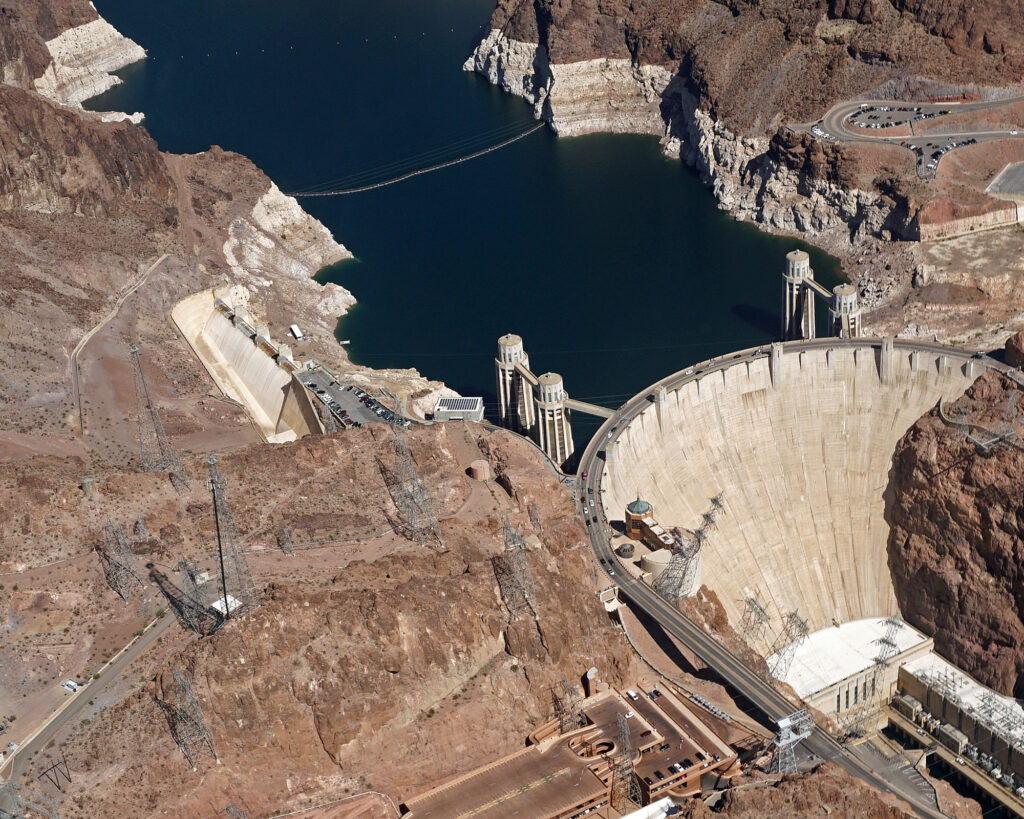
Grim water level projections for lakes along the Colorado River system are expected to impact OPD5 power resources in the near future; including how much those resources could cost. That was the message relayed to the OPD5 board of directors during a meeting held on Wednesday, March 25.
“The power contracts and hydrology on the Colorado River are looking dire,” OPD5 CEO/General Manager MeLisa Garcia told the board. “It was already a brutal winter for snowpack levels in the mountains. But in the past two weeks, the forecasts have been reduced by 26 percent because of higher than normal temperatures.”
Unseasonably warm weather in mid-March quickly evaporated most of a record low snowpack in the western mountains. This has drastically reduced the spring runoff which usually helps recharge the Colorado River system.
According to Bureau of Reclamation (BOR) projections, there is a 73 percent chance that the water elevation at Lake Mead will fall below 1,035 feet during 2027. At that level, 12 of the 17 turbines at Hoover Dam will be unable to generate electricity, thus drastically decreasing power output at the dam. The most probable inflow projections estimate the generation capacity at Hoover plummeting from 1245 megawatts, at just above the 1,035 water elevation mark, to 381 megawatts as soon as it dips below that level. The nameplate capacity at Hoover is 2080 megawatts.
These bleak predictions also extend upstream to elevations at Lake Powell. BOR estimates an 87 percent chance that the water levels there will fall below 3,500 feet in elevation at some point during 2027. That is the threshold at which power production at the Glen Canyon Dam is no longer possible.
“These are just snapshot projections, with a lot of variables that can still affect them,” Garcia told the board. “There is not 100 percent certainty that it is going to happen this way. But the trends are there, and they point to a very high likelihood that we will see a significant decrease in our hydro-power resources in the near future.”
That would have a direct negative impact on OPD5’s power portfolio. Hydropower makes up about 23 percent of the district’s resources. Power from Hoover Dam supplies about 6.5 percent of the overall OPD5 load, while Glen Canyon Dam provides roughly 3 percent.
What’s more, these hydro resources are among the least expensive in the OPD5 portfolio. They average around 3 cents per kilowatt hour (kwh) compared to the roughly 9 cents/kwh that the district is contracted to pay for its other market-based resources.
“For every reduction in hydro we sustain, we have to go out and replace those resources in the market,” Garcia said. “That will be much more expensive.”
To make matters worse, OPD5 has benefitted in the past by using its Hoover Dam allotment to ramp and shape the timing of the resource in order to reduce how much market-rate power it has to buy.
“The most valuable part of our hydro may be that we have had the flexibility to ramp it up and down depending on the time of day,” Garcia said. “So when solar is in full production, we ramp down our hydro. Then when solar is dropping off, we bring it back up again. Then we get to take advantage of that ramping ability. But when we lose those turbines at Hoover, we will lose the ability to do that. We still haven’t fully calculated what that might cost us.”
All of this is yet another factor that is increasing energy demand in the region and raising costs for small utilities like OPD5.
“We don’t want to get people fretting that this is going to affect their rates right away,” Garcia said. “There are still a lot of factors in play that could change the scenario. And, as always, we do all we can to keep our rates stable. We are working with both state and federal legislators as well as agencies like the Colorado River Commission of Nevada to do all we can. But at some point soon, we have to be prepared that all of this could become a reality.”