

OPD5 celebrates 90 years of service to communities
Font Size:
Overton Power District #5 is celebrating its 90th anniversary this month. OPD5 was officially established on October 28, 1935, as a general improvement district under Nevada state law.
But there were many factors that had to be lined up to get it to that point. What’s more, it took vision, leadership and determination in the years afterward to get the power flowing to local homes and businesses.
Over time, though, all of those efforts paid off. The formation of OPD5 brought a sea-change to the quality of life for local residents; a change that, nowadays, is easily taken for granted.
The rural dilemma
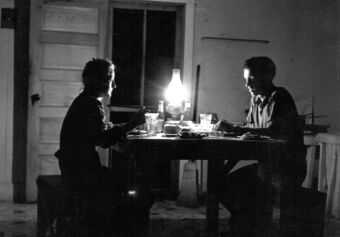
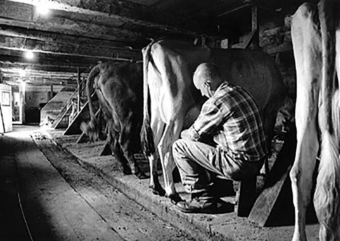
The OPD5 story begins amidst the Great Depression-era conditions of the 1930s. At that time, most homes in rural areas, like the Moapa and Virgin valleys, were without any electric service. Farmers milked cows by hand in the dim light of kerosene lanterns. Families relied on the wood stove and the washboard for cooking and cleaning; and the idea of air conditioning as a relief from the summer heat wasn’t even a distant dream yet.
By the mid-1930s, large power utilities were already serving the urban areas of the country. But these entities tended to ignore outlying rural communities because of the high cost of the new infrastructure that would be required, and the low profit potential in these sparsely-populated areas.
Pockets of rural electrification had emerged, even in the local communities. A few industrious farmers and ranchers had assembled water wheels to harness the power of moving water in small streams and irrigation ditches. In some areas, neighbors had even banded together to form small co-ops for the purchase of diesel generators and basic power distribution equipment. These operations could power a few lightbulbs in a handful of homes. But it wasn’t nearly enough to supply the greater communities’ needs at the time; much less offer an engine for future growth.
Setting all the pieces in place
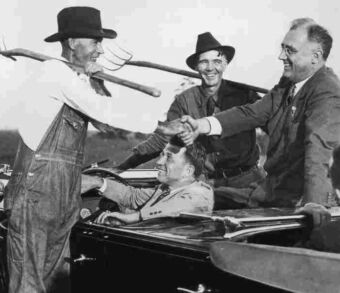
When President Franklin Delano Roosevelt took office in 1933, he was seeking innovative ways to ease the effects of the Great Depression by encouraging economic growth – especially in rural areas of the country. Plans were developed to provide federal assistance in bringing electric utility service to rural communities.
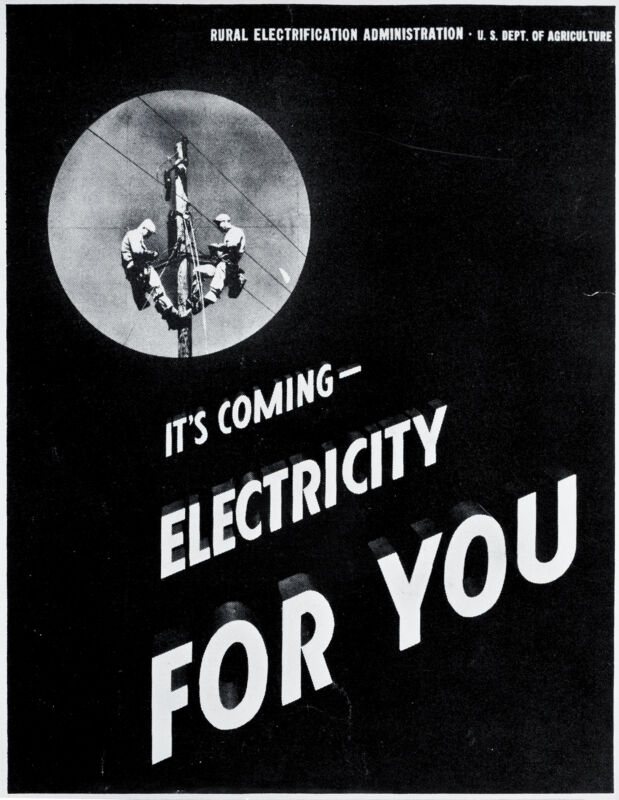
On May 11, 1935, Roosevelt signed Executive Order No. 7037 establishing the Rural Electrification Administration (REA). A year later, Congress confirmed this action by passing the Rural Electrification Act which set aside funding for a lending program, administered by the REA. This would provide a path for small improvement districts and co-ops to be formed all across the country to bring power to rural areas.
Also in 1935, Assembly Bill 256 was making its way through the Nevada State Legislature. It set a mechanism for the establishment of power districts in the state. The bill allowed these not-for-profit, quasi-government entities to be organized as rural utilities for the production, transmission and/or distribution of electricity in small communities across Nevada. That year, the bill successfully passed both houses of the legislature with near-unanimous votes. A short time later, it was signed into law by then-Governor Richard Kirman.
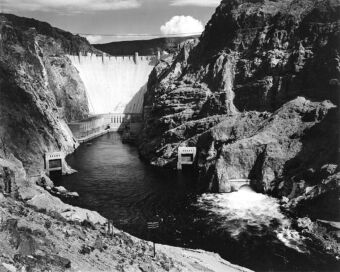
Yet another element that was crucial to the formation of OPD5 was a major engineering marvel taking shape, during this same time, in Black Canyon near Boulder City. Hoover Dam had begun construction in 1931. The waters of the Colorado River had been diverted around the dam site late in 1932, and the first layer of concrete was being poured by June of 1933. By early 1935, Hoover Dam had already begun to impound the waters of the Colorado River, forming the vast Lake Mead behind it.
In addition to water management functions, the construction of the dam set up perfect conditions for significant hydro-electric power generation. As a power plant, Hoover Dam would ultimately have a nameplate capacity of more than 2,000 megawatts. That was plenty to carve out allotments of hydro-power to supply the newly-formed rural power distribution utilities which had been formed under the new state law.
Legal formation of OPD5
The Moapa Valley communities were among the first to apply to the state for the formation of a power district. During this process, however, the communities of Bunkerville and Mesquite expressed an interest in joining in the application. Thus, the Moapa Valley communities withdrew their initial application, made the necessary changes to add Virgin Valley into the mix, and then resubmitted the application as Overton Power District. In October of 1935, the Nevada State Public Utilities Commission rendered an opinion on the application, and issued an order to officially create OPD5.
The Commission’s opinion listed several local elements that favored the formation of OPD5. Firstly, the district was considered to have a “large (property) valuation” at approximately $2.5 million. Secondly, the proposed service territory had minimal public debt; with the area’s Educational District #1 bonded for $58,000 and the town of Overton carrying an outstanding debt of $3,000. Thirdly, the district featured many acres of improved farm land under cultivation, with about 250 families in each valley. In addition, there was much more uncultivated agricultural land available – as well as several potential mining operations – that could be brought into full operation given a source of “cheap power” in the community.
With all of these elements in its favor, the order to form OPD5 was issued and signed by Harley A. Harmon, Chairman of the Commission. This founding document was dated October 28, 1935.
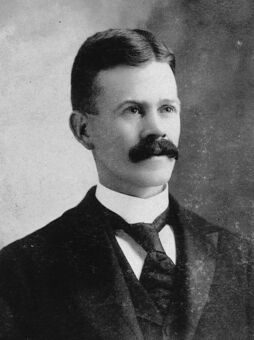
In the days following the order, the Clark County Commission appointed three local residents to serve on the OPD5 Board of Trustees, in accordance with state law. This first board consisted of Warren H. Lyon of Overton, Leo M. Hardy of Mesquite, and Jesse Winn of Logandale.
Getting things off the ground
The OPD5 board met for the first time on November 15 in the Overton home of board member Warren Lyon. In that meeting, the first board officers were chosen. Lyon was appointed as the first OPD5 Board President, Leo M. Hardy as Treasurer, and Jesse Winn as Secretary.
The first meeting minutes recorded that the board discussed details of how to obtain an allotment of Hoover Dam power through a formal application to the Colorado River Commission of Nevada. They also talked about the process of securing federal funds from the REA to build the transmission and distribution systems needed to deliver that power to local customers.
With no seed money to get started, and no initial source of revenue, the board appealed to the Clark County Commission for a pledge to institute a 1-cent property tax levy on all parcels within the district. Using this pledge as collateral, the board obtained a $200 bank loan to hire an engineer and do a feasibility study on how best to bring Hoover Dam power to district homes and businesses.
The full report on the resulting study was given at a board meeting held on July 6, 1936. It proposed that OPD5 connect into a proposed transmission line being built from Hoover Dam to Pioche in order to supply power into Lincoln County. OPD5 could tap into that line at a place called “Sheep Mountain Junction” which was located near the current Coyote Springs area. The engineer’s report proposed that a 33 kV line could be built from that switch to a proposed substation at Glendale. The power could then be distributed from there to homes and farms in the OPD5 communities.
On May 18, 1937, a public meeting was held at Moapa Valley High School in Overton to present the board’s plans to local residents and to take public input in moving forward. In a brief presentation, Lyon explained that wholesale energy from Hoover Dam could be purchased through the Colorado River Commission at a rate of 1 ¼ cents per kWh. REA official George Long, who was in attendance at the meeting, also spoke in some detail about how the federal agency was making loans available to rural districts to build power distribution systems.
By the end of the meeting, a motion was made by Logandale resident Edwin Wells to fully support OPD5 in moving forward with the plans as discussed. The motion passed by an overwhelming majority of those in attendance.
Building the infrastructure
In September, the OPD5 board received a letter from the REA stating that $178,000 in federal loan funds had been allotted for construction of the proposed power line.
Recognizing the need for a full time Project Superintendent to manage the construction work, the board appointed Warren Lyon to fill that role for a monthly salary of $125. A few months later, the board appointed Clarence A. Lewis of Overton to fill Lyon’s board seat which had been vacated due to the appointment.
By August of 1938, the engineering and design work for the 93 miles of transmission line, and the Glendale Substation, was completed. The following month, the board opened four bids from contractors on the project. They accepted the bid of Bennett and Taylor of Los Angeles, California in the amount of $144,037.80. Construction on the line began in January of 1939. An additional $33,000 in REA funds was later requested to cover cost overruns, most of which were due to some faulty engineering done early on in the project.
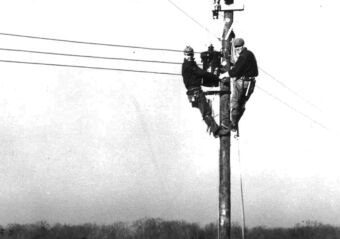
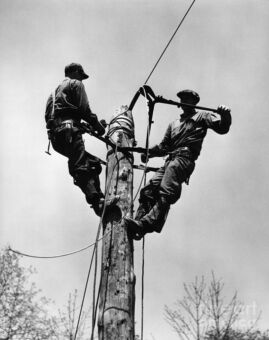
Construction of power lines across the desert at that period of time was no easy task. Logandale resident Bryant Robison, 93, recalled that his father Dell Robison was one of the crew hired by the contractor to work on the line. Though he was only a child at the time, Bryant remembered his dad talking about the long days he had put in to install poles along the right-of-way..
“They didn’t have any power equipment to do the job, so most of the work had to be done by hand,” Bryant Robison said. “In some cases it took a two-man crew all day long to dig a hole for just one power pole, using only shovels and a steel bar for breaking through the rocks and caleche.”
Other negotiations
During that time, the board was also negotiating on several fronts to get the district into operation and start the power flowing.
 One of those negotiations was with the Lincoln County Power District #1 for an agreement to deliver the initial OPD5 power allotment, of up to 5 megawatts, along the Lincoln County transmission line from Hoover to the Sheep Mountain junction. The two districts reached an amicable agreement without much trouble at that time.
But technical problems arose after the connection was completed. Capacity issues with the OPD5 infrastructure caused the switch at Sheep Mountain Junction to trip open frequently. Each time this happened, it caused total outages all along the Lincoln County line to the north. Once open, the switch could only be closed manually. This required someone to travel out to the remote location to bring the power back on. The problem wasn’t solved until an upgrade was done to the OPD5 line several years later.
In another outstanding challenge, the trustees were in extended discussions with the members of two existing neighborhood electric co-ops. These were Logandale Power and Light, represented by Elmer Bowman and Louis Adams; and Moapa Valley Light, represented by Guy Doty in Overton.
One of the conditions for receiving REA funding had been that the money could only be used to build new infrastructure. It could not fund the purchase of any already-existing equipment. Thus, there was very little benefit to the district in buying out these small co-ops. However, out of a desire to be a good neighbor, and to avoid hard feelings among the existing co-op members (all of whom would become OPD5 ratepayers), the board sought to negotiate a fair value for these entities, and then buy them out.
Negotiations on this were lengthy and complex. But by February of 1939, the district had found the funding for a reasonable buyout. The board approved a resolution to purchase the Logandale entity for $9,821; and the Overton entity for $9,570. Both of these offers were accepted and the transactions completed. Thus, the field was cleared for OPD5 to be the sole power utility for its territory.
The customer at the end of the line
OPD5 faced a fundamental challenge in the final step of getting power into the homes of its residents. The district had obtained an allotment of Hoover Dam hydropower, and secured adequate federal funding to build the transmission lines and distribution infrastructure into local neighborhoods. But if homeowners couldn’t afford to install the electrical wiring in their homes necessary to receive the service, all of these efforts would be for nought.
Fortunately, the REA had already established a small loan program to address this issue. The agency issued a $5,000 loan to the district. That money could then be used to make micro-loans to help homeowners electrify their homes. The loans would then be repaid by the ratepayer over a period of time (usually five years) as part of their power bills.
The home electrical installation, offered through the REA funding, was modest by today’s standard. It consisted of only a handful of outlets and basic lightbulb fixtures for each home. Bringing in large appliances, which required more complex infrastructure and added power use, was not top-of-mind at that point; at least, not yet.
As it was, local residents quickly expressed interest in taking advantage of these loans to prepare their homes for the new electricity service. It didn’t take long for the district to loan out all of the first round of these REA funds. The board then went back for a second tranche of the funding which was also quickly loaned out for similar purposes.
As the construction on the system neared completion, the board began a search for a more permanent general manager for the district. Warren Lyon had expressed interest in stepping down as project manager. The board wanted to find someone with field experience as an electrical lineman who could operate the OPD5 system going forward.
After reviewing a number of possible candidates, the board finally decided to hire Irvin Bryner of St. George, Utah as the first general manager. Bryner had been working for many years as a lineman for Dixie Power. He was originally hired by OPD5 at a salary of $175 per month.
The day the lights came on
By May of 1939, the project was complete. It included a new Westinghouse substation transformer which had been delivered in April and was installed at the new Glendale substation. At that time, Glendale was the only substation on the OPD5 system.
The board decided that a public event should be planned to celebrate the completion of the system and the historic electrification of the communities.
A group of five men, one from each OPD5 community, was appointed to a committee for planning the event. The board requested that the County Commission provide $150 to fund the celebration and the request was granted.
Then-County Commissioner Harold Stocker was invited to serve as Master of Ceremonies for the evening. The event was held on May 20, 1939.
First-hand accounts
When the lights first came on, it was a major occurrence for the residents in both valleys. It became a hallmark event that people would remember for the rest of their lives.
Former Logandale resident Elaine Hardy Whipple, who passed away in 2022 at the age of 94, had especially vivid memories of this festive occasion. Whipple grew up in Bunkerville and was 11 years old when the lights first came on in town.
“It was so exciting!” she recalled in a 2019 interview. “I remember everyone was running up and down the streets of Bunkerville talking about it. They were saying, ‘We have lights! We have lights!’. We all thought it was just magic! It was like a dream come true for our community.”
Mesquite resident LaFaye Leavitt Lee was five years old at the time. She lived in a family home which was located on what is now the Mesquite City Hall property.
“I can remember when the lights were turned on in Mesquite,” she said. “Everyone was just thrilled! But I can also remember before that, when all we had were oil lamps to light the way after dark. It made such a difference to us to have electricity.”
Lee’s father, Faye Leavitt, had built the family home in 1934. With some expectation that electric utility service would be coming soon. So he included all the necessary electrical wiring in the construction.
“Before the power came, the Hughes boys had a (diesel-fueled) power plant that they rented out to people,” Lee said. “So you could rent it for maybe an hour or two a day. And you could do your ironing or your washing with it. Our house was all ready for power. So when it finally came through, we could just plug in and we had power to our home round the clock.”
Given the rudimentary nature of the system, real reliability of power service was still a ways off, Lee said. “It seemed like if a bird even flew over a pole somewhere, the power would go off,” she said. “But even with that, we were definitely grateful for what we had.”
 Paradigm shift
The OPD5 power allotment from Hoover Dam had started small. The community’s early power needs were fairly basic. But it didn’t take long before people were looking to power more than just a couple of light bulbs and a plug-in radio in their homes.
Soon people were asking for much more robust connections. They wanted to power large appliances, well pumps, water heaters and, eventually, cooling systems. Mining operations and other business concerns were also looking for industrial-grade power connections. Before the end of the year, the OPD5 board was already exploring the need for a larger power allotment from the Colorado River Commission.
All of this brought a dramatic change in lifestyle to the households of Moapa Valley and Virgin Valley. The shift would extend far beyond what anyone had imagined before the lights came on.
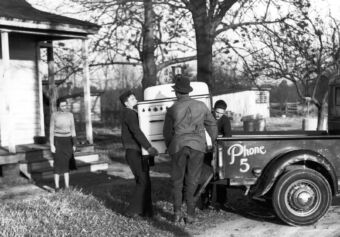
“Before that time, for example, our only refrigerator was just a wooden box frame covered with burlap that we had to keep wet,” Logandale resident Bryant Robison said. “That was the only way we had to keep things cool. It didn’t always work real well. Having an electric refrigerator changed everything for us.”
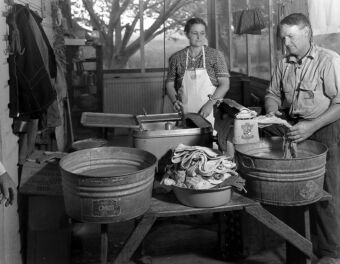
Elaine Whipple recalled the major shift that took place in the tedious process of cleaning clothes. At that time, people worked hard, long days in the sun and got their clothes very dirty, she said. So cleaning the laundry was a major undertaking that required help from the whole family.
“The men had to build a big fire to boil water,” Whipple recalled. “They would pour the hot water out into basins and then we all went to work cleaning the clothes by hand. It was hard work and it took a lot of time.”
 With electric utility service, most homes in town soon had water heaters and electric washing machines to do most of that work for them. It freed up a lot of time for other pursuits.
LaFaye Lee remembered another dramatic change that took place as indoor cooling systems eventually became available to temper the southern Nevada summers.
“The only way to try and keep cool before then was to go outside and sit in the shade under a tree,” Lee said. “I can remember all the women taking their sewing out there and sitting under the trees together, socializing with one another with all the kids close by.”
Summertime also brought different sleeping arrangements. “We had bedsteads that were kept outside,” she said. “In May we just moved our mattresses out there, too, and that is where we slept. When it got really hot, we would dip our sheets in the ditch water to get them wet, and that helped keep us cool to sleep at night.”
The change to those conditions took a while longer in coming. It wasn’t until the 1950s when evaporative coolers started to be available and affordable for local households. Window air conditioning units followed shortly thereafter. But central air systems for homes didn’t come along until the 1970s, Lee said.
Looking back over more than nine decades of living in the communities, Bryant Robison said that the changes brought by having utility-grade electrical service may remain the most crucial that have taken place in the OPD5 communities.
“There really wasn’t much that we did back then that wasn’t somehow affected, and made easier, by having electricity,” he recalled. “Nowadays we kind of take all of that for granted. But it really did change everything for us.”